10 Hardest Languages
1. Basque
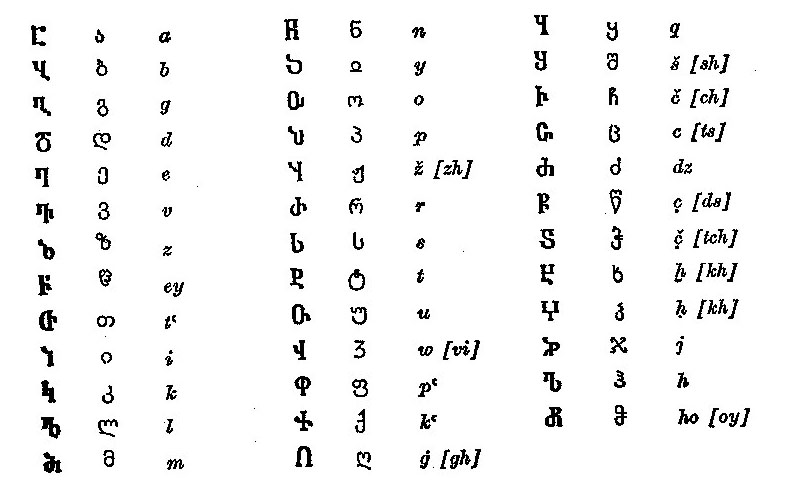 A study by the British Foreign Office found that Basque was the hardest language to learn for English speakers. A dialect of the Basque people in Spain, the Basque language carries no syntactic parallels to English – despite having evolved in a region surrounded by Romance languages like Spanish and French.
As with many of the languages on this list, the Basque language is agglutinative. This means that words are formed, then altered with prefixes and suffixes. For example, the word “lege” means law in Basque, but the sentence “according to the law” wouldn’t be 4 distinct words, but instead would be “legearen arabera.”
Basque also uses case endings in order to indicate relationships between words. For example, the Basque word for “mountain” is “mendi”, but the phrase “to the mountain” is simply “mendira”. Although Basque is extremely challenging for English learners syntactically, it shares the Roman alphabet, and the pronunciation is relatively easy for English speakers.
2. Arabic
 Arabic is another one of the hardest languages to learn – some would even argue its the hardest. The first challenge for English readers learning Arabic is the script, which looks extremely foreign to anyone raised on the roman Alphabet. Many of the letters in Arabic have 4 different forms, and vowels are not included in writing.
Unlike with European languages, English speakers won’t find any similar sounding words in Arabic. To make things more complicated, in Arabic the verb generally comes before the subject and object, and they can be singular, dual, and plural. Just your average present tense verb will have 13 different forms. There are also 2 genders, as well as 3 noun cases.
There are also different dialects of Arabic. While most English leaders will study modern standard Arabic, there are also variations that are as different from modern standard Arabic, as French and Spanish are different from English.
3. Cantonese
 Cantonese is a Chinese dialect spoken in the Canton region of China (including Hong Kong). It shares its written form with Mandarin Chinese – or perhaps more accurately – it actually has no written form of its own and borrows the Mandarin writing system. However, the way Cantonese is spoken will differ than the way it is written using Hanzi characters.
Speaking of Hanzi characters, written Chinese is not phonetic. If you’re learning a new European language, or even an exotic phonetic language like Korean, you can at least sound out words you’re not familiar with. In Chinese, the writing system is pictoral, meaning that each character represents a different word. The only way to know the meaning of a character is to have it memorized, all 20,000+ characters.
To make things even more complicated, the exact same character will almost always have multiple meanings, depending on the context. The same sounding word can also have more than one written form, with each written form having a different meaning.
As difficult as the writing system is to grasp, the spoken dialect is perhaps even more complex. Compared to Cantonese, spoken Mandarin Chinese is a breeze to learn. Like Mandarin Chinese, Cantonese is a tonal language, which can be extremely confusing for English speakers. The same sound spoken in a different tone can hold a completely different meaning. And unlike Mandarin Chinese which has 4 tones, Cantonese has 8 tones, with each change in pitch and inflection re-shaping a word’s meaning.
4. Finnish
 Finnish has no Germanic or Latin influence, making its vocabulary completely alien to English speakers. Finnish grammar is also infamous for its difficulty. With 15 noun cases, sometimes just small differences can result in a huge difference in meaning. For example, “talotta” means “without a house” in Finnish, while “talolta” means “from a house.”
Fortunately, Finnish is a phonetic language and written in the Roman Alphabet, so despite the lack of common vocabulary and alien grammar, at least you’ll be able to sound out the words.
5. Hungarian
 Hungarian is in the same Finno-Ugric language family as Finnish. Although Hungarian does use the Roman alphabet, the pronunciation is significantly different from English. For one, it has vowel sounds that are completely alien to English speakers (á,é,ó,ö,ő,ú,ü,ű,í), as well as consonant clusters that will get your tongue tied up into knots (ty, gy, ny, sz, zs, dzs, dz, ly, cs).
In Hungarian grammar, possession, tense, and number are not dictated by word order, but by suffixes. This makes the sentence structure seemingly flexible, but in reality, extremely similar sentences can take on completely different meanings with slight alterations in the suffixes.
6. Navajo
 Not that you’re going to try learning Navajo anytime soon, but if you did, you’d be in for quite a challenge. Navajo is so unique that it was used during World War II as the basis for an unbreakable code used by the Americans in the Pacific War against the Japanese. By creating a code based on the Navajo language and using trained bilingual Navajo “code-talkers”, the Americans were able to create a code that was never broken by the Japanese.
Virtually everything in Navajo is done exactly the opposite as its done in English. It is a verb-centered language. Even descriptions are given through verbs, and English adjectives have no direct translation in Navajo. Another interesting feature of the language is that it has animacy – a hierarchy of animation determines what verbs a noun will take on. For example, nouns like human and lightning are at the top of the hierarchy, while children and large animals come after, and abstractions are at the very bottom.
7. Mandarin Chinese
 In discussing Cantonese, we already discussed the complexity of written Chinese. The lack of phonetics make it a hostile language to the learner.
Like Cantonese, Mandarin is a tonal language. This means that a simple change in pitch and/or inflection can completely modify the meaning of the same sound. To make spoken Mandarin easier for English speakers, Mandarin can be sounded out using “Pinyin”, a transliteration system that uses the Roman Alphabet to present the language phonetically. It was created by the Chinese government in the 1950s to help standardize the language.
Of course, Pinyin doesn’t make the tonal aspect of the language any easier. The sound Ma” for example can represent 5 distinct words, depending on the tone, or lack thereof. For example:
“Mā”, said with a high and level tone, means mother.
“Má”, said in a rising tone, means hemp.
“mǎ”, said in a tone that dips low and then rises back up, means horse.
“Mà”, said in a dropping tone, means to scold.
“Ma”, said in a flat, neutral tone, is used at the end of a sentence to indicate that a question is being asked.
As far as grammar goes, Mandarin Chinese is actually much easier than most other languages, since there’s no conjugation and words generally only have one grammatical form. However, it also posses unique challenges of its own. For example, Mandarin uses about a dozen adverbs that have no English equivalent.
8. Japanese
 Unlike Mandarin Chinese, Japanese is actually extremely easy to pronounce for English speakers. The simple combinations of vowels and consonants used to make-up Japanese pronunciation is very easy for a native English speaker to grasp.
Unfortunately, written Japanese is even more difficult than written Chinese. It incorporates the Kanji pictoral characters from Chinese, and also incorporates additional characters that are exclusive to Japanese.
9. Estonian
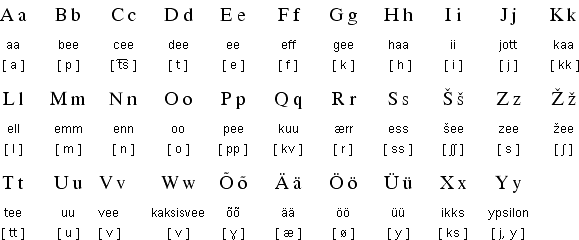 Estonian has a rigid case system. In case you forgot, a case system is where words inflect depending on their grammatical function in a sentence. And with 14 cases, that’s a lot to keep in mind.
The many seemingly arbitrary exceptions to Estonian grammar rules also serve to make this language a challenge for English learners.
10. Polish
 Like Estonian, the Polish grammatical system makes use of cases. Its also seems sometimes that Polish grammar actually has more exceptions than it has rules. While for example, a language like Germanhas 4 cases where proper usage can be deducted based on logical rules, the 7 cases in Polish often seemed to be used arbitrarily, rather than being based on a higher level rule. You simply have to be aware of each new usage through practice and study

